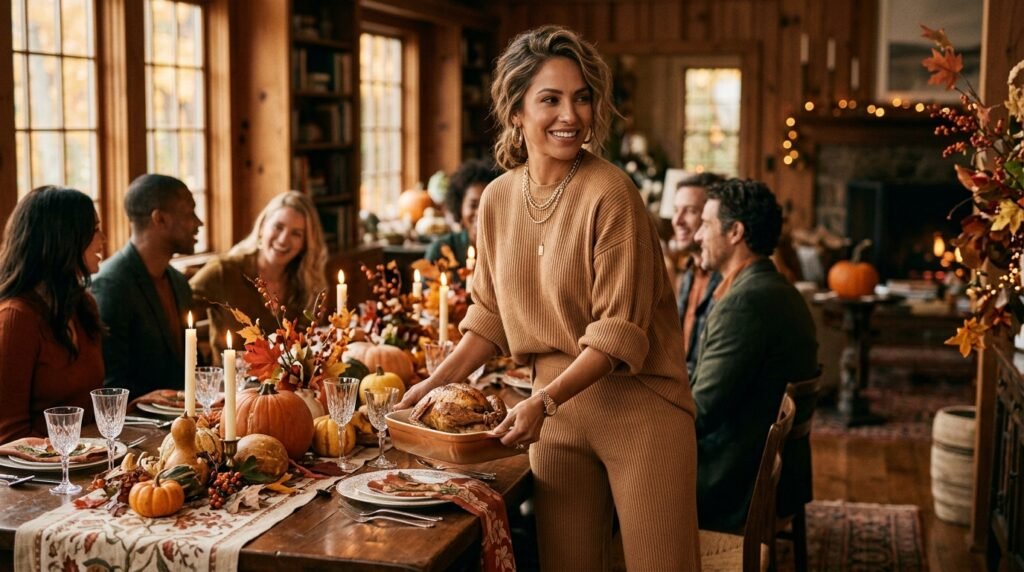

Hosting Thanksgiving is the only holiday role where the outfit works four jobs in one day.
The cook at 10 AM. The greeter at the door at noon. The table centerpiece at 3 PM. The cleanup crew at 8. No guest ever thinks about this — but every host knows: the outfit that survives the oven, the doorbell, the family photos, and the mountain of dishes simultaneously is not an outfit, it is a strategy.
Here is what the best-dressed hosts have figured out: the hosting outfit is built in phases — a base that cooks, a layer that greets, a structure that sits at the table, and a shield for the cleanup. Four phases, one outfit, zero changes needed between them.
So this guide builds the hosting thanksgiving outfit phase by phase — following your actual day from the first turkey baste to the last dish dried. Nine complete looks built for the role, the fabrics that survive the kitchen, and the apron math that changes everything.
The show is yours. Dress for the whole performance.
Follow our Pinterest boards for daily outfit inspiration, and join us on Facebook so you never miss a seasonal guide.
The Host’s Outfit Physics — Why This Role Is Different

Four demands no guest outfit ever faces — and the host builds for all of them.
Heat is the constant. The oven runs for six hours, and the house climbs to kitchen-climate by 2 PM. Heavy fabrics cook you before the turkey does — the hosting outfit is built in breathable layers, never in one warm piece.
The hands are always busy. Basting, stirring, carrying, greeting with a dish in hand — the hosting outfit has no fussy elements. Nothing that needs adjusting, nothing fragile, nothing that fights the apron.
The photos happen anyway. The host is in every candid — the doorway greeting, the table moment, the kitchen laugh. “I was cooking” never excuses a photo, because the photos happen mid-cooking. The outfit reads intentional in every unplanned frame or it reads messy in all of them.
The day is fourteen hours. First prep to last dish — longer than any guest’s entire visit. The hosting outfit is a marathon build, and marathon builds have their own fabric laws.
The Host’s Fabric Laws (Four Non-Negotiables)

Four fabric rules separate hosts who look fresh at 8 PM from hosts who look like they lost a battle with the oven.
Law one: breathable base. Cotton, ribbed knit, French terry — fabrics that handle kitchen heat without steaming you. Polyester base layers turn the kitchen into a sauna.
Law two: washable everything. The stuffing will reach you. Dry-clean-only fabrics are banned from the hosting role — the outfit will meet gravy, and the relationship should survive.
Law three: stretch through the torso. Bending, reaching, lifting — the host’s torso moves more than any guest’s. Rigid waistbands and non-stretch tops fight the job all day.
Law four: dark mid-tones over true white. Cream is risky near gravy; black shows flour. The mid-tones — rust, camel, olive, burgundy — hide every kitchen incident while photographing warm. The palette logic from our fall fashion trends 2026 guide is host-approved.
Phase 1: The Morning Prep Look (8 AM – 11 AM)
The cooking hours — the outfit’s most demanding phase, and the one guests never see.
1. The Ribbed Knit Uniform

A fitted ribbed top with stretch pants or pull-on jeans — the morning’s foundation. Sleeves pushable, fabric breathable, silhouette clean enough for every doorway photo that happens mid-prep.
Why ribbed: it holds shape through six hours of movement, handles the oven heat, and looks intentional every time a family member wanders in for a taste. The base layer in our thanksgiving loungewear guide’s elevated tier, promoted to host duty.
2. The Overalls Situation

Denim overalls over a fitted tee or turtleneck — the host aesthetic that went from utility to fashion statement. Every pocket holds something useful, the denim wipes clean, and the look photographs with more charm than any sweatpant ever managed.
The hosting bonus: overalls read “I’ve got this” — the confidence costume of hosting. Guests arrive to a host who looks like the day is under control, because the outfit said so first.
Phase 2: The Guest Arrival Look (11 AM – 1 PM)
The doorbell phase — where the apron comes off and the greeting layers go on. The host’s outfit needs one transition piece that flips it from kitchen to welcome.
3. The Shacket Layer

The flannel-shacket thrown over the morning base — the one-move transition from cook to greeter. The structure photographs, the warmth handles the porch, and it comes off again the moment the kitchen calls.
The door-photo secret: guests photograph the host in the first thirty seconds. The shacket phase is what those photos capture — which is why the layer goes on before the first doorbell, not after.
4. The Blazer Flip

A camel or black blazer over the ribbed base — for the hosts whose Thanksgiving runs dressier. The blazer converts the kitchen base into a greeting outfit that reads fully intentional, and it hangs on a chair between door duties.
The blazer logic: same piece from our work outfits for women guide, working a holiday shift. Structure at the door, comfort underneath — the hosting translation of office armor.
Phase 3: The Table Moment (2 PM – 5 PM)
The seated showcase — the phase every photo stars, and the one the outfit was really built for.
5. The Elevated Ribbed Set

The matching ribbed set — top and wide-leg pants in camel or rust — with the apron retired. This is the look that sits at the head of the table reading like a styled choice rather than a work uniform.
Why it owns the table phase: ribbed sets photograph structured in every seated frame, move through second-helping missions, and survive the hand-on-shoulder hugs without shifting. The comfort reads as confidence in every photo.
6. The Sweater-Dress and Tall Boots

A soft ribbed sweater-dress with tall boots — the one-piece upgrade for hosts who want the table moment to feel like an occasion. Dress up in the thirty minutes between the turkey resting and the guests sitting.
The thirty-minute window: the turkey rests, the sides finish, and the host has exactly enough time to add earrings, touch the hair, and swap the apron for the dress — the costume change that makes the table photos legendary.
7. The Satin Skirt Switch

The morning’s ribbed top stays; the pants switch to a satin midi skirt. The five-second swap that turns the host into the best-dressed person at her own table — texture against texture, comfort against shine.
The swap math: one garment change converts the entire look. The skirt from our thanksgiving outfit guide’s elevated tier, borrowed for the host’s table moment.
Phase 4: The Cleanup Crew (6 PM – Late)
The final phase — dishes, leftovers, the couch collapse. The outfit’s last stand, and the phase nobody plans for.
8. The Shacket Returns

The morning layer comes back over whatever survived the table phase — the cleanup uniform. Sleeves pushed, collar up, the dishes phase embraced in clothes that already met gravy once today.
The realistic rule: cleanup clothes were decided at 8 AM when the base layer was chosen. The host who planned the day’s arc never needs a change — the layers rotate, and the outfit ends as comfortably as it started.
9. The Fleece Final Form
For the houses where cleanup becomes couch: the brushed fleece set from our thanksgiving loungewear guide’s evening tier. The last outfit of the night — soft, earned, and photographed in the day’s final candids.
The tradition it becomes: the leftover-couch photo is the holiday’s truest frame — the host finally seated, plate in hand. The fleece look is what that tradition wears.
The Apron Math — The Host’s Real Secret Weapon
The apron is not a costume — it is the outfit’s armor system, and the math changes everything.
The good apron, bought on purpose. Linen or canvas in a color that matches the outfit’s palette — not the novelty gift apron. An apron that photographs well is an apron that stays on, and the one that stays on saves the outfit beneath it every time.
The apron-on look is a look. Apron over ribbed knit, hair up, sleeves pushed — the cooking-phase photo that reads charming rather than frazzled. Hosts who embrace the apron as styling win every kitchen candid.
The timing discipline: apron on during active cooking, off the moment the last side is done. The apron-off reveal is the transition to the table phase — the outfit’s intermission.
The Hair and Nails of a Four-Phase Day
The host’s beauty plan runs on the same phase logic as the outfit.
Hair: the styles that survive all four phases — the low bun from our thanksgiving low bun guide, the claw clip twist, the slicked pony. Built at 8 AM, still intact at 8 PM — that is the hosting hair standard.
Nails: short, polished, and done the night before. The shades from our fall nail colors guide in the darker mid-tones — hands appear in every dish-passing photo, and hosting hands work hard enough without chipped polish adding drama.
The makeup plan: the ten-minute base that survives steam — the techniques from our thanksgiving skin prep countdown and the blot-don’t-powder discipline. Hosts refresh once, before the table phase, and the photos carry the day.
Hosting Thanksgiving Outfit FAQ
What should I wear while hosting Thanksgiving?
The four-phase build: a breathable ribbed base with stretch bottoms for cooking, a shacket or blazer layer for greeting, an elevated swap — matching set, sweater-dress, or satin skirt — for the table, and the morning layer’s return for cleanup. Fabrics stay washable, mid-toned, and stretch-friendly through every phase.
How do I look put together while cooking Thanksgiving dinner?
The ribbed base with pushed sleeves reads intentional in every doorway candid, and the apron — bought on purpose in a palette-matching color — becomes styling rather than armor. The one-move shacket layer over the base handles every doorbell between courses.
When do I change outfits if I am hosting?
You do not — the phases use layers instead. One garment swap maximum: the skirt switch or sweater-dress addition in the thirty-minute window before the table. Hosts who plan layer rotations never need full changes, and the day’s photos show one continuous, intentional look.
What fabrics should a thanksgiving host avoid?
Dry-clean-only anything, true white near the gravy, stiff non-stretch waistbands against a bending day, and polyester bases under oven heat. The host’s fabric laws: breathable, washable, stretchy through the torso, and dark mid-tones that forgive every kitchen incident.
What do hosts wear for the cleanup phase?
The morning layer returns — shacket over whatever survived the table, or the fleece set for houses where cleanup becomes couch. Cleanup clothes are chosen at 8 AM with the base layer; hosts who plan the arc never face the phase in something precious.
More questions? Ask us on Facebook and we will build your four-phase outfit around your menu and your house’s climate.

The Show Was Always Yours
Nine looks, four phases, and the fabric laws that hold the whole day together — the hosting thanksgiving outfit stops being an afterthought the moment it gets the strategy the role deserves.
Build the base tonight. Hang the greeting layer by the door. Stage the table-phase swap where you can reach it. Thursday, the outfit moves through the day exactly as you do — and every photo, from flour to final toast, catches a host who planned the whole performance.
Save this guide to our Pinterest boards so the phases are on your phone through the day, and complete the role file with our thanksgiving outfits guide for your guests and the thanksgiving loungewear looks for the couch that follows.
New seasonal guides every week. Stay comfortable, stay in command! 

Alexander Smith is an accomplished blogger with years of experience in crafting engaging and insightful content. Known for his expertise and passion for storytelling, Alexander brings a unique perspective to Fascinate Names, captivating readers with his thoughtful analysis and fresh ideas. His extensive background in digital media and writing makes him a valuable voice in the blogging community.